Test and tag NZ is one of those topics that confuses a lot of business owners. Is it legally required? Who needs to do it? How often? The short answer is that testing and tagging is not strictly mandatory under New Zealand law, but your legal duty to keep electrical equipment safe absolutely is. Understanding the difference matters.
If you run a business with employees, contractors, or customers using electrical appliances, the Health and Safety at Work Act 2015 places a clear obligation on you to keep that equipment electrically safe. Testing and tagging to the AS/NZS 3760 standard is one of the most widely accepted ways to demonstrate you are meeting that obligation.
At GoFox Electrical, our licensed electricians work with businesses across New Zealand to help them stay safe, compliant, and prepared.
What Does Test and Tag NZ Actually Involve?
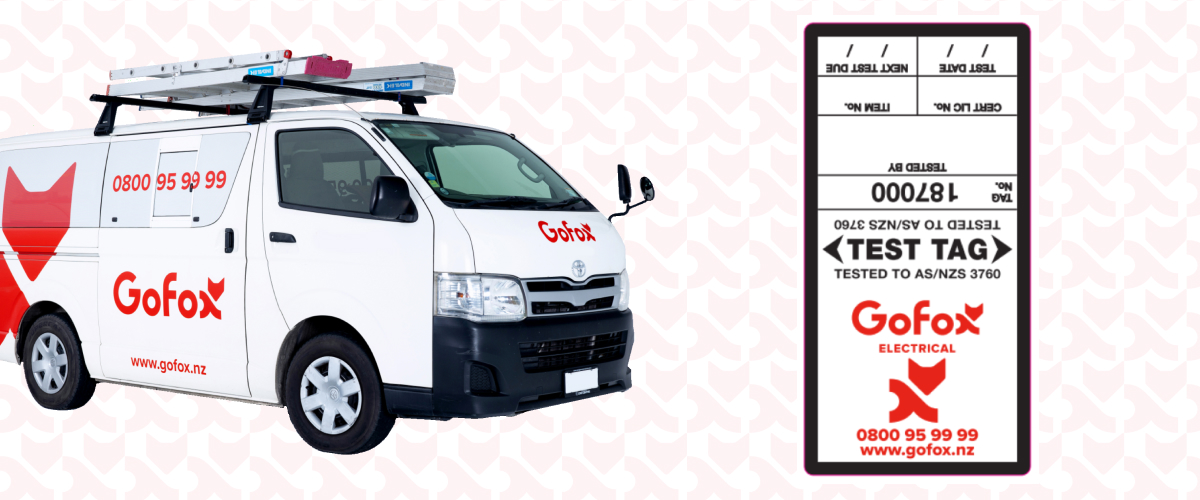
Testing and tagging means inspecting and electrically testing portable appliances and leads. Once an item passes, a tester attaches a tag showing the test date, the next due date, and the tester’s details.
The process identifies faults that a visual check will miss. Damaged insulation, faulty earth connections, and internal wiring issues can all show up through proper testing. So while a walk-around check has value, it is not enough on its own.
A competent person with the knowledge and skills to follow AS/NZS 3760 must carry out the testing. That person does not need to be a registered electrician, but they do need to understand the standard and use the testing equipment correctly.
How Often Do you Need to Test and Tag?
Testing frequency depends on the environment where the equipment operates. In short, higher-risk environments require more frequent testing.
As a general guide:
- Construction and demolition sites: every 3 months
- Factories, warehouses, and production facilities: every 6 months
- Schools, offices, and lower-risk environments: every 12 months
- Server rooms and similar low-risk settings: every 5 years
If equipment moves between sites, the requirements for the new environment apply immediately. Some businesses also choose to test more frequently than the minimum, particularly where equipment sees heavy daily use or exposure to the elements.
Why Test and Tag NZ Matters for Your Business
Beyond legal compliance, regular testing protects your people, your equipment, and your bottom line.
Electrical faults in the workplace can cause shocks, fires, or costly equipment damage. Catching problems early through a structured testing programme reduces the risk of incidents and avoids unexpected downtime. In addition, many insurers expect businesses to maintain a testing and tagging programme, and some factor this into their policy terms.
A well-maintained testing record also demonstrates due diligence. For example, if a workplace incident does occur, documentation of regular testing can provide important evidence that your business took its safety obligations seriously.
Working with a local electrician or a trained competent tester helps ensure your programme stays consistent, properly recorded, and carried out to the correct standard. Our electrical services team can help you work out what your business needs. You can also find your nearest GoFox team through our locations page.
Common Questions Asked
Is test and tag legally required in New Zealand? Testing and tagging itself is not a strict legal requirement. However, you are legally required to ensure all electrical equipment in your workplace is safe. Testing to AS/NZS 3760 is one of the most accepted ways to demonstrate compliance with that duty.
Who can carry out test and tag in NZ? It does not need to be a registered electrician. However, the person doing the testing must be competent, meaning they have the knowledge and skills to follow AS/NZS 3760 and use the testing equipment correctly.
How often do I need to test and tag my equipment? It depends on your industry and environment. Construction sites require testing every 3 months, while offices and lower-risk settings typically need annual testing. Your specific requirements depend on how and where your equipment operates.
What happens if electrical equipment fails a test? Take the item out of service immediately, label it clearly, and arrange for a qualified person to repair or replace it. Do not return it to use until it passes a retest.
Can GoFox help with workplace electrical testing? Yes. Our licensed electricians work with businesses across New Zealand on electrical safety, compliance, and testing programmes. Get in touch with your local GoFox team to find out how we can help.
Follow GoFox Electrical on Facebook and LinkedIn for practical electrical tips and updates.